Can You Really Change the World Starting With One Choice?
The world feels broken, but what if the solution isn’t out there—it’s within you? Every thought, every reaction, every choice shapes…


Carbon monoxide (CO), like many gases, cannot be detected by our human senses. We cannot see it, smell it or taste it. But unlike many gases, small amounts are extremely harmful to us.

Not everyone will readily admit to peeing in swimming pools, but it does happen. An anonymous survey from 2012 found that 19 percent of adults admitted they had peed in a pool at least once. But when you use a pool as a giant toilet, that yellow trail contains some nasty bacteria and parasites.

Exposure to fracking chemicals in utero may harm the immune system and diminish the ability of female offspring to fend off diseases like multiple sclerosis, according to a new study with mice.
 Anxiety caused by exposure to pollution may make people more prone to cheating and unethical behavior, according to new research. And that can be a driver behind the higher crime rates in high-pollution areas.

The search for autism’s causes is a daunting task — but researchers are investigating a variety of factors that might play a role.
 A common herbicide is ending up in our food, thanks to the growing practice of using it to dry crops in preparation for harvest. In addition to speeding crop drying, glyphosate can help synchronize ripening in plants at harvest time.
 The higher the level of particulates in the air, a new study shows, the greater the indications of psychological distress. Where a person lives can make a big difference to health and quality of life. Every increase in pollution of 5 micrograms per cubic meter had the same effect as a 1.5-year loss in education.
 People in northern China have a reduced life expectancy when compared with people living in the south due to higher concentrations of air pollution, a new study suggests.
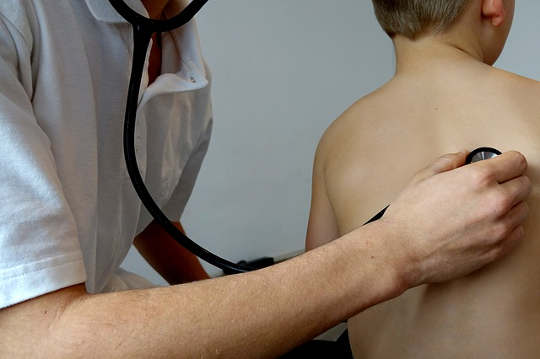 The most heavily used pesticide in California, elemental sulfur, may harm the respiratory health of children who live near farms that use it, new research suggests.
 Scientists have developed a method for removing more than 99 percent of bisphenol A (also known as BPA) from water quickly and cheaply.
 A new electronic sensor can monitor water quality in homes or cities, informing residents or officials of the presence of lead in water within nine days—all for around $20.
 Researchers measuring the exposure to pollution inside cars during rush hour commutes have found that the levels of some harmful particulate matter are twice as high as previously believed.
 The environmental advocacy group Environmental Defense Fund (EDF) on June 15 released a study about dietary lead exposure, with a focus on food intended for babies and young children.
 A “congestion tax” that discourages downtown driving not only cuts traffic and pollution, but also sharply reduces children’s asthma attacks.

A new way to test for a wide range of micropollutants in waterways has already turned up a nightmarish cocktail of contaminants.
 New research shows how brake and tire dust—a cloud of tiny metal particles—could wreak havoc on respiratory health.
 The chemical bisphenol A, or BPA, appears to aid the survival of inflammatory breast cancer cells, according to research that reveals a potential mechanism for how the disease grows.
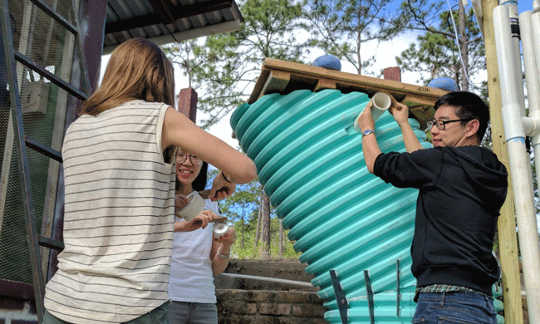 What’s at stake in a world where science is marginalized? Programs like AguaClara, which offer sustainable, low-cost solutions to communities in need.
 In the United States, Florida has the sixth highest number of hazardous waste sites known as Superfund sites
 The rise in recent decades of diseases such as inflammatory bowel disease and rheumatoid arthritis suggests that factors in the environment are contributing.
 Glyphosate is by far the most heavily used chemical weed killer in human history. It’s so pervasive, it’s difficult to avoid ingesting it on a daily basis.
 In the absence of a federal U.S. policy for schools located near potentially dangerous sites, community activists search for safer solutions.

Scientists have now analyzed long-awaited data from the Natural Resource Damage Assessment to determine the specific rates of biodegradation for 125 compounds that settled to the deep ocean floor after the Deepwater Horizon oil spill.